
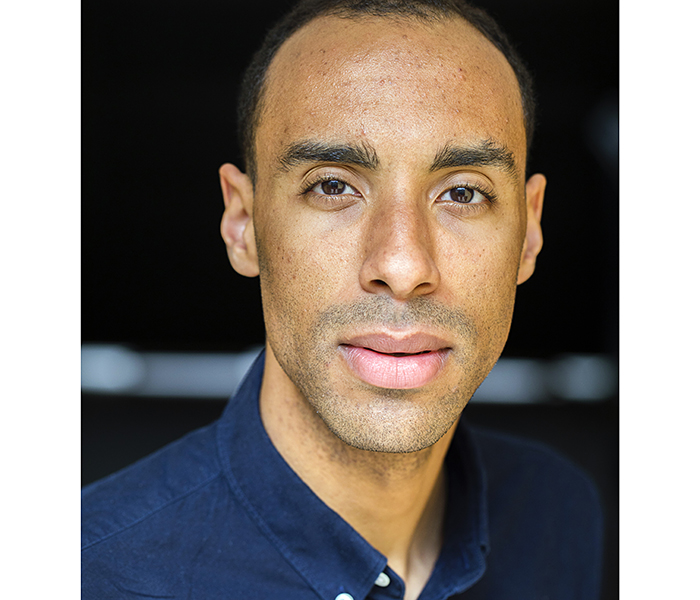
Max forskningsprojekt heter ”Receptive Perspectives: Perceptual and Photographic Experience”. Nedan följer en sammanfattning av projektet på engelska.
In English:
Max Minden Ribeiro, who last year defended his Ph.D. in Theoretical Philosophy at the Department of Philosophy in Lund, has been awarded a Leverhulme Early Career Fellowship. Max will take up a three-year position at the University of Warwick's Department of Philosophy, where he will be a member of the Warwick Mind and Action Research Centre (WMA).
Max's research project is called Receptive Perspectives: Perceptual and Photographic Experience. Here is the abstract of the project:
In everyday life, perceptual and photographic experience play a distinctive role in our knowledge acquisition practices. When I see a deer in the forest, and when I am sent a photo of a deer, I am similarly well placed to gather non-inferential empirical knowledge e.g. knowledge that that deer is (or was) at that location. Setting aside sceptical scenarios, in both cases my experience ‘settles the question’, making further evidence redundant by making visible the fact of the deer’s presence at the location (Austin 1962, 115). Perceptual and photographic experience can play this role because they are receptive, in the sense that they depend on their objects. If the deer were not there, it could neither be seen nor photographed. In being there (in the right spatial relation to a perceiver or recording equipment), it enables these forms of experience and knowledge. But given that perceptual and photographic experience depend on their objects in radically different ways, there is a puzzle as to how they could support such closely related epistemic achievements.
This project analyses perceptual and photographic experience side by side. It aims to establish (i) how the two forms of experience depend – and seem phenomenologically to depend – on their objects, and (ii) how the metaphysical, cognitive and phenomenological aspects of the two kinds of experiences play together to determine their epistemic profiles. These questions are especially urgent now, when the prevalence of AI generated images threaten to undermine the epistemic value of photographic experience. The project has the final aim (iii) of deploying its analysis of photographic receptivity in diagnosing how deepfake images deceive and indicating how their effects can be mitigated. This will be a significant contribution to the fledgling field of deepfake epistemology and the first to draw systematically on the philosophy of perception or photography.